A video presentation is a recorded talk, usually your slides with your voice and often your face, that people watch when it suits them instead of sitting through it live.
You can make one with the deck you already have and a browser-based recorder like Dadan, which captures your slides and webcam together and lets you clean up the result by editing its transcript.
What Is a Video Presentation?
A video presentation is a presentation recorded as a single video or link, so the delivery is fixed and the viewer decides when to watch and what to skip. Most combine slides or a shared screen with narration, and many add a webcam overlay so viewers can see who is speaking.
In a room, you can read faces and stop for questions. In a recorded presentation you get neither, so the structure and the visuals have to do the explaining you would normally do on the fly.
It also differs from a webinar recording. A webinar recording captures a live session with its dead air and tangents, while a video presentation is planned for one person watching alone, which usually makes it shorter and edited.
Most video presentation examples fall into a handful of jobs, and the job decides both the length and how much you need to appear on camera.
What Makes a Good Video Presentation?
A good video presentation is judged by whether people watch to the end and then do what you asked. Production polish has less to do with that than most people expect, and some of the clearest evidence comes from online education, where viewer behavior on recorded lectures has been studied at scale.
One Goal Per Video
Decide the single thing the viewer should know or do afterwards, and write it down before you open your slides.
Anything that does not serve that goal becomes a second video or a linked document. A long deck recorded end to end often tries to do several jobs at once, and viewers drop off at whichever part does not concern them.
Short Segments Hold Attention Better Than Long Recordings
In a study of 6.9 million video watching sessions on edX, researchers Philip Guo, Juho Kim, and Rob Rubin found that engagement dropped sharply once videos ran past about six minutes.
Their main recommendation was to plan content in chunks shorter than six minutes.
The data comes from course videos, so treat six minutes as a strong guide for teaching content and a looser one for a sales pitch or an update.
Your Face Helps When It Appears at the Right Moments
The same study found that videos mixing the instructor’s face with slides were more engaging than slides alone. It also found that informal, personal recordings could hold attention better than expensive studio productions.
For you, that means a webcam and a quiet desk are enough, and a clear, conversational delivery matters more than lighting rigs.
Slides Built for a Laptop or Phone Screen
Many people will watch your recorded presentation on a laptop, and some on a phone.
Small text and dense charts that work on a projector become unreadable there, so put one idea on each slide and use a larger type with fewer words than you would show in a meeting room.
Delivery That Sounds Like Talking
Reading a script word for word tends to sound flat on camera, and the edX researchers noted that speaking rate affected engagement.
A talk track of short prompts per slide, or a teleprompter that scrolls at your own pace, keeps you on message while still sounding like you.
How to Create a Video Presentation Step by Step
The workflow below uses Dadan to record and edit, with your slides in whatever app you already use, such as PowerPoint, Google Slides, Keynote, or Canva.
Most of the steps happen before you press record or after you stop, because that is where a recorded presentation is won or lost.
Step 1: Decide What the Viewer Should Do After Watching
Write one sentence and keep it visible while you work. Use it to cut slides. For example, if you are recording a product update for customer-facing staff, the sentence might be “After watching, you will know which two features changed and where to find them.”
Every slide that does not help with that sentence goes.
Step 2: Write a Talk Track for Each Slide
For most slides, two to four short prompts are enough. Write out in full only your opening and closing lines, since those are where people stumble most.
If you prefer to read, Dadan’s built-in Prompter keeps your script on screen while you record. Click Prompter on the recorder toolbar, paste your script or use the AI writing option to draft one from a short prompt, then press Play so the text scrolls at your pace.
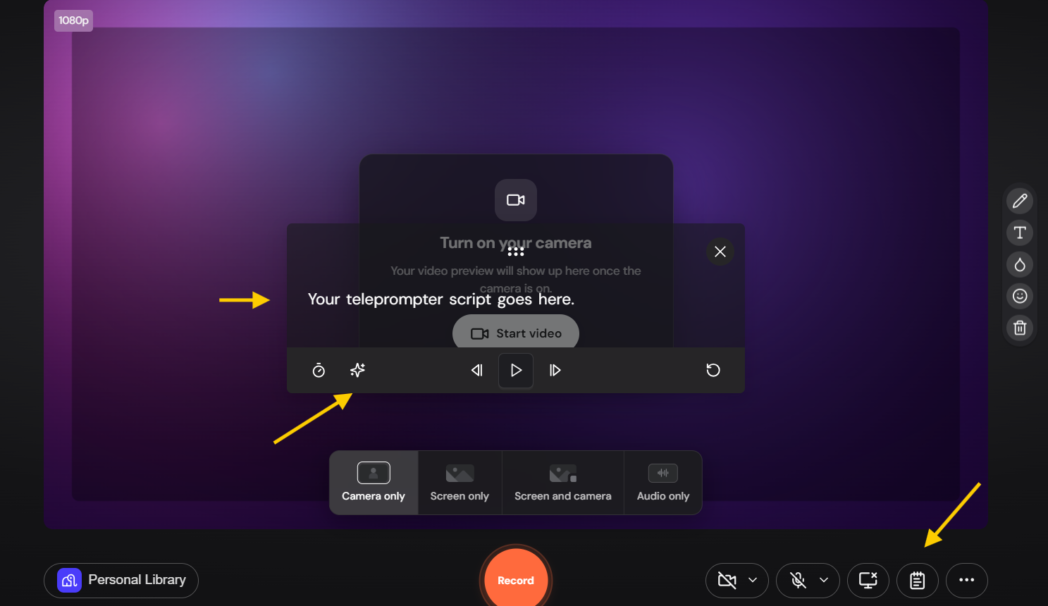
Drag the prompter close to your camera so your eyes stay near the lens. The script never appears in the final video.
Step 3: Adapt Your Slides for a Small Screen
Keep the deck in 16:9 so it fills a standard player without black bars. Increase font sizes and remove footers and slide numbers that add clutter. Split any slide that holds more than one chart.
Leave one corner of each slide clear, usually the bottom right, because that is where your webcam bubble will sit. If a key number lives in that corner, your face will cover it for the entire slide.
Step 4: Run Your Slideshow in a Window You Can Capture
A full-screen slideshow takes over your display, which makes it awkward to see your notes or the recorder controls on a single monitor. The fix is to run the slides in a window and record only that window.
In PowerPoint, go to Slide Show, select Set Up Slide Show, and choose Browsed by an individual (window). The slideshow then opens in a resizable window, and you still click to advance slides and animations.
In Google Slides or Canva, present in a browser tab and record that tab. If you have two monitors, put the slides on one and your notes and the recorder on the other.
Dadan supports recording across multiple screens if you need to switch between them.
Step 5: Open the Dadan Recorder and Set Up the Frame
In the Dadan web app, click Create, then Advanced Recording, to open the Dadan Screen Recorder. Set Ratio to Landscape 16:9, which suits slides and presentations.
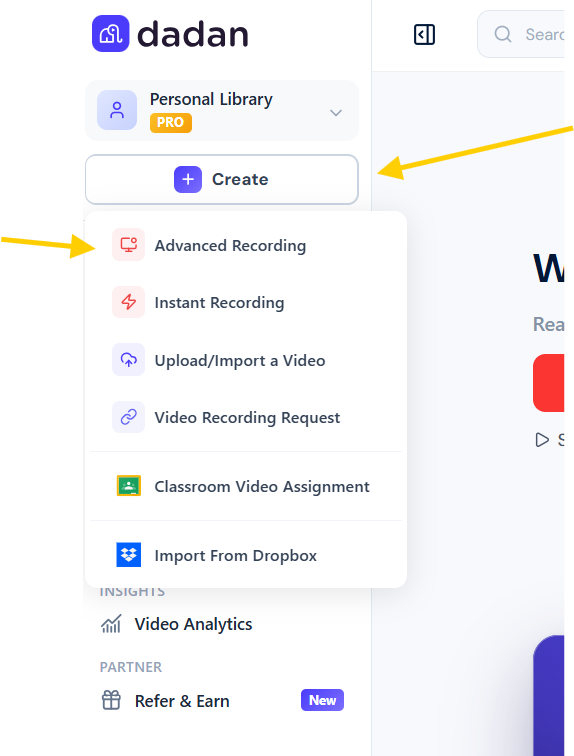
Under Layout, pick Picture-in-Picture if you want a webcam bubble over your slides, or Side-by-Side if you want your face to carry more weight. Add a background, such as a solid color or an uploaded image, if the slides do not fill the frame.
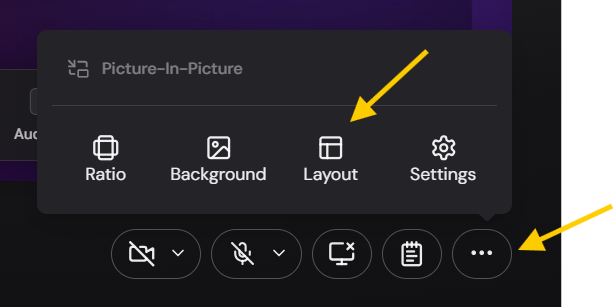
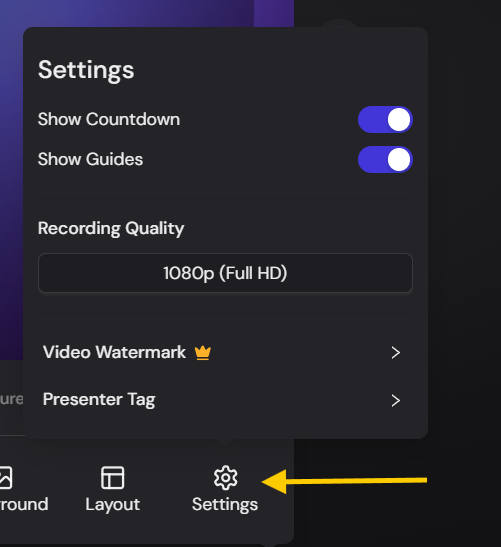
Open Settings to choose your recording quality and turn on Show Guides, which overlays alignment lines so your webcam and slides sit where you want them. Then select Show Screen and pick the window or tab running your slides. The free plan records up to 720p, and paid plans go up to 4K.
Step 6: Record One Section at a Time
Record each section of the deck as its own take instead of the whole presentation in one go. A mistake on slide 30 then costs you one short section, and each section can stand alone as a shorter video if you decide to split the presentation later.
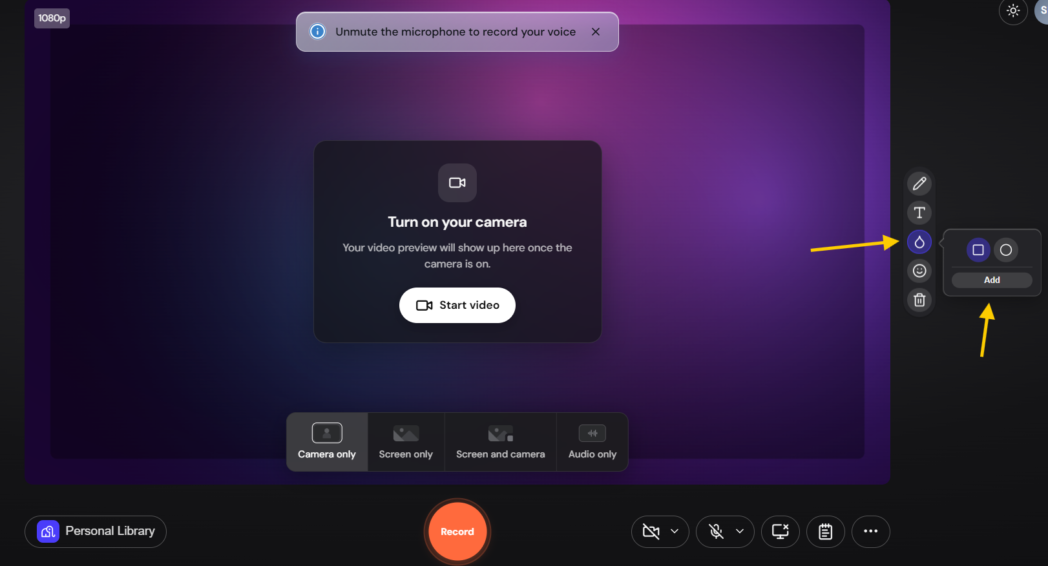
While you record, you can draw and add text on screen, or use Droplet to hide sensitive information, and all of it becomes part of the final video. When you finish a section, click Stop. The recording uploads to your library automatically.
Step 7: Clean Up the Recording in the Transcript Editor
Open the video and switch to the Transcript Editor. Dadan transcribes everything you said, and deleting a sentence from the transcript cuts that part of the video.
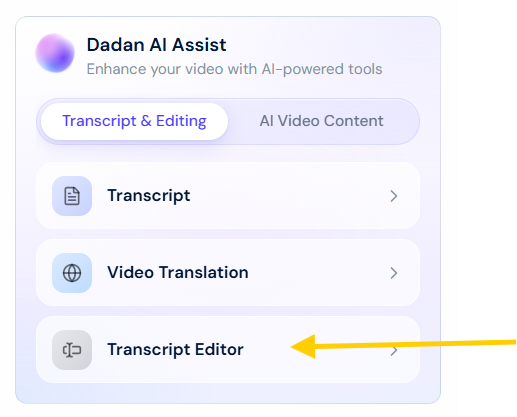
Click Remove Filler Words to see a preview with the fillers highlighted and the estimated time saved, then apply the changes. You can also remove silences and reorder segments, then click Publish Changes when you are done.
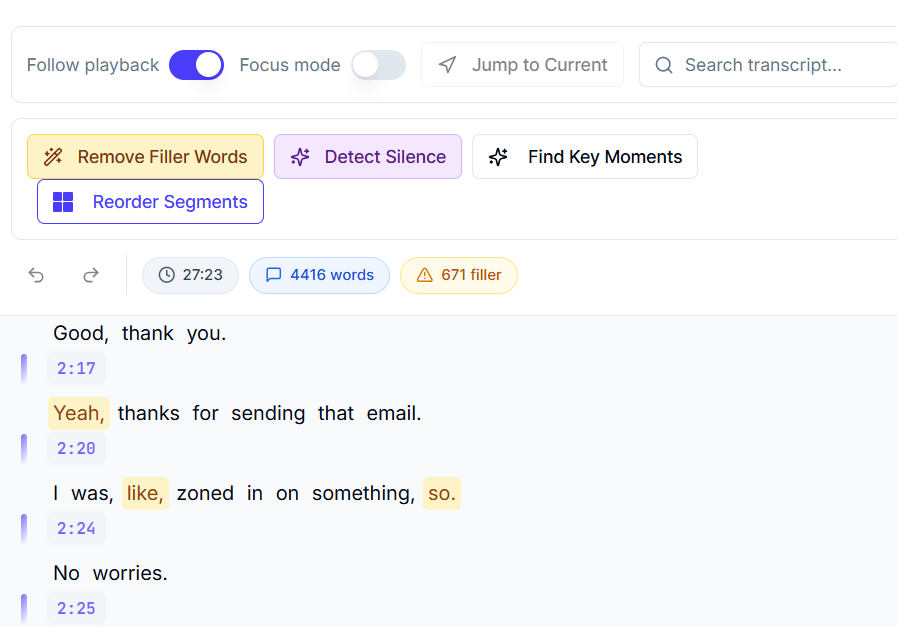
For heavier editing, Dadan’s Advanced Video Editor adds a timeline with captions and zoom, along with a Brand Kit for your logo and colors.
You can pull your section recordings from your library onto the same timeline to join them into one presentation video, and the Intro Maker adds a short title slide at the start.
Step 8: Share the Link With the Right Settings
Copy the share link, then set who can watch. Dadan lets you add a password and an expiry date. You can also limit which domains can embed the video, and share timestamped links that jump to a specific slide.
Once the link is out, Dadan notifies you when someone watches. In analytics, check audience retention first, because it shows you the exact slide where people stopped watching.
How to Record Your Presentation With Voice and Webcam
Muffled or echoing audio makes a recorded presentation hard to follow even when the slides are clear, so set up your microphone first and your camera second.
Test Your Mic and Camera Before the First Take
Run your setup through Dadan’s free Mic and Webcam Test before you record anything long. In the Dadan Recorder, the microphone starts muted to prevent accidental noise, and a tooltip reminds you to unmute it.
Record a ten-second test and play it back, since a muted mic is an easy way to lose a whole take.
Pick a Layout Based on How Much You Need to Be Seen
Picture-in-Picture puts a small webcam bubble in a corner of your slides and suits most training and update presentations.
Side-by-Side splits the frame between your camera and your screen, which works well for pitches where your delivery is part of the message. Webcam Only centers you on a background and fits a short personal intro or closing.
Record With Voice Only When Your Face Adds Nothing
For data-heavy slides where viewers need every pixel, turn the camera off with Show/Hide Cam and record narration over your screen. You can record those slides as a separate voice-only section and keep the camera on for the opening and closing.
Keep Your Notes Visible to You and Off the Video
Besides the Prompter, the Dadan web recorder lets you add private sticky notes beside your recording canvas for talking points and reminders. They stay visible to you while you record and do not appear in the final video, which removes the need for a second screen just to see your notes.
How to Make Your Video Presentation More Engaging
Engagement in a recorded presentation comes from giving the viewer reasons to keep watching and ways to act before they leave. Each of the techniques below takes a few minutes in Dadan and addresses a specific point where viewers tend to drop off.
Open With What the Viewer Gets
Use the first 15 seconds to say what the viewer will be able to do by the end. Introductions about yourself and the agenda can wait, or be cut entirely, since a presenter tag on your webcam can introduce you. If you want a branded title card, keep the Intro Maker slide to a few seconds.
Show Your Face at the Turns
Put yourself on camera where the edX research suggests it helps most, which is at the opening and the close.
One practical approach is to record those moments in Side-by-Side or Webcam Only, record the dense middle in Picture-in-Picture or voice only, and join the takes on the Advanced Video Editor timeline.
Point at What You Are Talking About
A viewer who cannot tell which number you mean stops following. Draw or add text on screen while you record.
In the Dadan desktop apps you can also zoom in while recording, and on Mac the view can follow your cursor, which helps when a slide holds a detailed chart.
Ask a Question Partway Through
Dadan’s in-video quizzes support several question types, including multiple choice and open text answers. Viewers get instant feedback and a score, and you can export every response. Polls work the same way for opinions instead of right answers.
If you would rather not write questions yourself, the AI Interactive Video Creator reads your video and suggests quizzes, polls, and calls to action at specific timestamps.
Add Chapters and Captions So People Can Skip
AI-generated chapters let viewers jump to the section they need, and they keep working when the video is embedded on another site.
Captions help anyone watching without sound, and Dadan can translate subtitles into more than 120 languages if your audience is spread across regions.
End With One Next Step
Close with a single ask, then put it on screen as a clickable call to action. Dadan’s CTA buttons can link to a page or open a Calendly booking, and in-video lead forms can send contacts straight to tools such as HubSpot or Mailchimp.
Best Tools for Creating Video Presentations
The right video presentation software depends on where your slides live and what needs to happen after you record. Dadan publishes this guide, so the entries below state plainly where another tool is the better fit. Pricing was checked against each vendor’s public pages in October 2026, so confirm current plans before you buy.
1. Dadan
Dadan is a browser-based video presentation maker that covers the full workflow, from recording your slides and webcam to measuring how people watch.
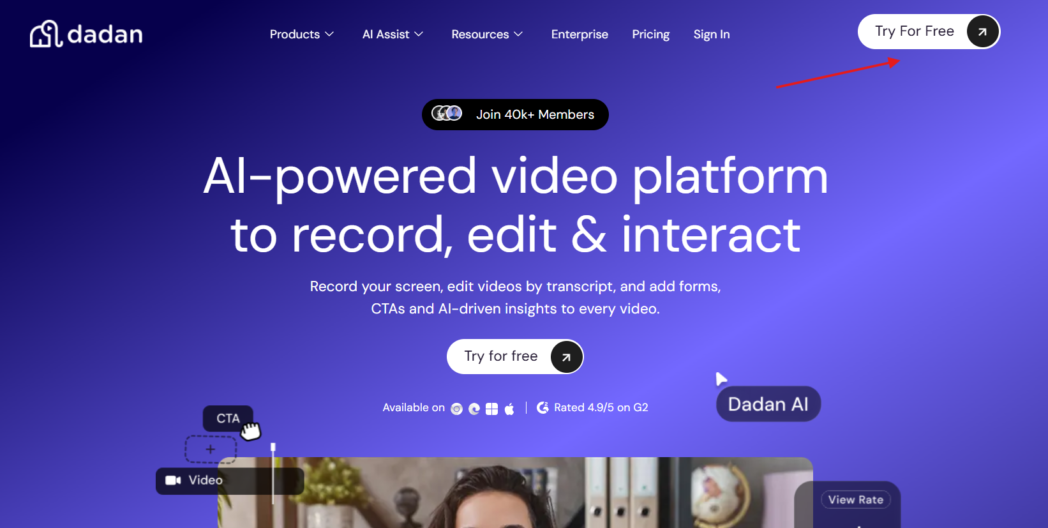
You can record from the browser with no install, or use the Chrome and Edge extensions or the Windows and Mac apps for longer sessions.
Where Dadan stands apart for presentations is what happens after the recording. You fix mistakes by editing text in the transcript and add quizzes or booking buttons inside the video.
Analytics then show the slide where viewers drop off. It also works in reverse through Request a Video, which sends a link that anyone can use to record and submit a presentation to you without creating an account.
Best For
- Presenters who record the same material often and want to fix mistakes in text instead of reshooting
- Trainers and educators who want to check understanding with quizzes inside the video
- Sales and marketing staff who need viewers to book a call or fill in a form from the video
- Teachers and hiring managers who collect video presentations from students or candidates
Key Features
- The Dadan Recorder captures your screen and webcam together or separately, with controls for ratio and layout.
- The built-in Prompter scrolls your script at your pace, and private sticky notes stay off the recording.
- The Transcript Editor removes filler words and silences and cuts video by deleting text.
- In-video quizzes and lead forms collect answers and contacts, and CTAs can open a Calendly booking.
- Sharing controls include password protection and expiry dates.
- Analytics include audience retention and CTA clicks.
Pros
- You can go from recording to a shareable link without exporting a file at any point.
- Transcript editing makes small fixes far faster than re-recording a section.
- Interactive elements give you data on understanding and intent, beyond view counts.
Cons
- The free plan caps recordings at 720p and 25 videos.
2. Microsoft PowerPoint
If your deck already lives in PowerPoint and you only need a video file, the desktop app’s built-in recorder is the shortest route.
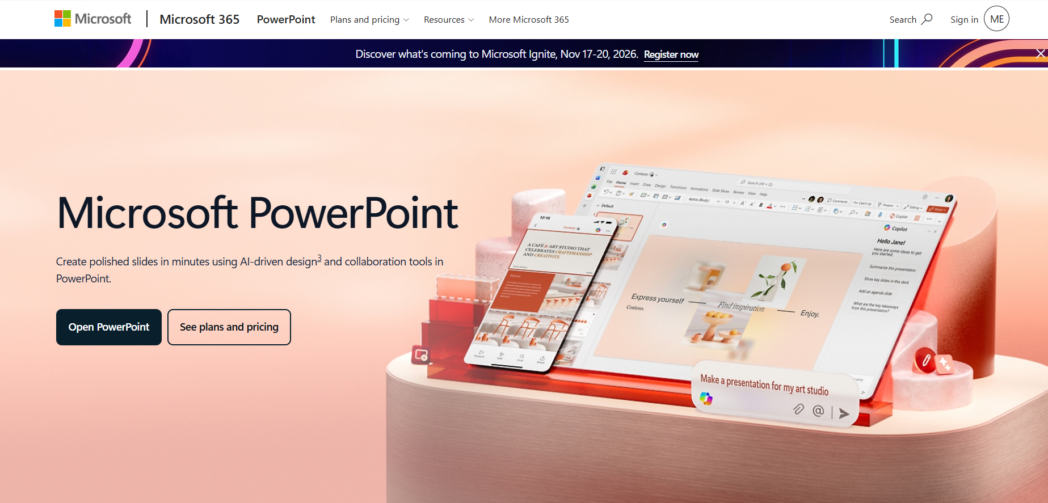
You record from the Record tab and read your speaker notes in Teleprompter view. Cameo adds your webcam, and the finished presentation video exports as an MP4.
The limits show up after export. PowerPoint gives you a file, so hosting and any viewer data depend on wherever you upload it. Microsoft also notes that creating the video can take a long time for long or complex presentations.
Best For
- PowerPoint users who need an MP4 for an LMS or a shared drive
- Presenters who want their speaker notes as a teleprompter without another tool
Key Features
- The Record tab captures narration and ink annotations slide by slide.
- Teleprompter view turns speaker notes into auto-scrolling text.
- Cameo places a live camera feed directly on your slides.
- Export saves the recording as an MP4 or WMV file.
Pros
- Recording sits inside software you probably already pay for.
- You can record a single slide again without redoing the whole deck.
Cons
- PowerPoint for the web does not support recording.
- Narration is not captured during slide transitions, which can clip words if you talk while advancing.
- There is no built-in hosting or viewer analytics.
3. Google Slides
Google Slides added built-in recording in late 2023, and it works well if your organization already pays for an eligible Google Workspace plan. You record from the Rec button with your camera and microphone running alongside the slides, and the recording lands in your Google Drive.
It is deliberately simple. You can re-record and blur your camera background, but there is no editor beyond that and no data on how viewers watch.
Best For
- Organizations on an eligible paid Google Workspace plan
- Quick internal walkthroughs where a Drive link is enough
Key Features
- Rec records slides with optional camera and microphone.
- Camera blur hides your background.
- Recordings save automatically to a Slides recordings folder in Drive.
Pros
- You never leave the deck you are presenting.
- Sharing follows the Drive permissions you already manage.
Cons
- Recording is unavailable on free Google accounts and on some Workspace plans.
- Each recording is limited to 30 minutes and works only in Chrome or Edge.
- You need edit access to the presentation to record it.
4. Canva
Canva suits presenters who design their slides in Canva and want to record without exporting the deck first. From the Present menu, choose Present and record, and Canva captures your slides along with your camera and mic as you present. When you finish, you can copy a link to the recording or download it.
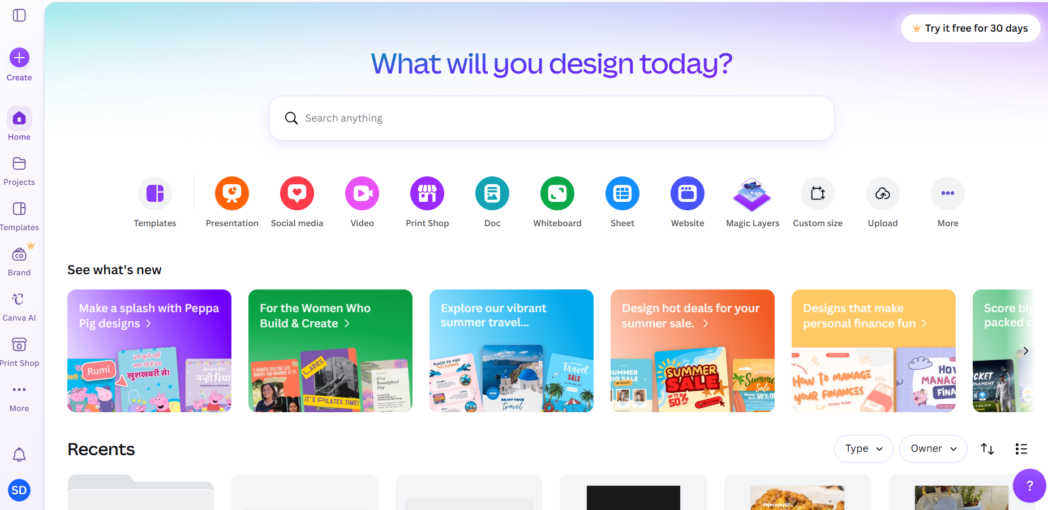
The recording side is light. Canva supports one recording per design, and the feature runs only on a computer.
Best For
- Designers and marketers who build decks in Canva
- Presenters who want a share link straight after recording
Key Features
- Present and record captures your slides with your camera and mic.
- Recordings can be shared as a link or downloaded.
- Record yourself adds a camera clip to a single page of a design.
Pros
- Design and recording happen in the same tab.
- Slides and embedded videos play inside the recording as they would live.
Cons
- Each design can hold only one recording.
- Canva’s help center states that Talking Presentations, including Present and record, is temporarily unavailable in India.
- There is no transcript editing or retention analytics.
5. Loom
Loom remains a fast way to record a screen with a camera bubble and send a link, and it fits well if your organization already runs on Jira and Confluence. For presentations, its speaker notes feature keeps your talking points on screen while you record.
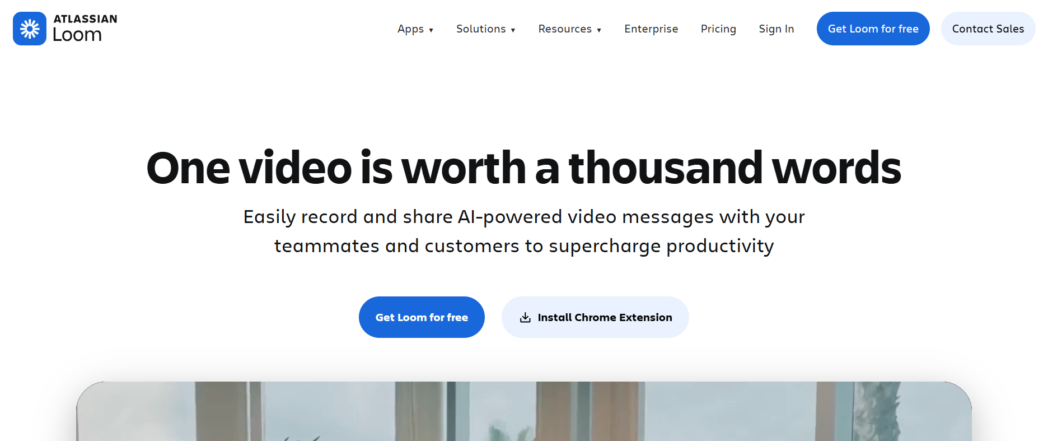
The free Starter plan is built for short messages, with a five-minute recording limit and 720p quality. Transcript editing and filler word removal sit on the Business + AI plan.
Best For
- Short internal updates where speed matters more than polish
- Organizations already using Atlassian products
Key Features
- Screen and camera bubble recording comes with system audio.
- Speaker notes are available on every plan, including Starter.
- Business + AI adds transcript editing and filler word removal.
Pros
- The record-to-link flow is quick and familiar to many viewers.
- Jira and Confluence integrations are included on the free plan.
Cons
- The free plan limits each recording to five minutes, which is too short for most decks.
- Editing by transcript requires the $24 Business + AI plan.
- Loom’s pricing page does not list in-video quizzes or lead forms.
Conclusion
The single change that improves most recorded presentations is recording in sections and fixing them in the transcript, because it removes the pressure to deliver a perfect 20-minute take.
Pair that with one goal per video and a clear ask at the end, and the gap between a deck someone skims and a video presentation someone acts on gets much smaller.
If your slides are ready, you can record your first section in Dadan from the browser today. Start free at dadan.io, no install needed.
FAQs
How do I create a video presentation?
Start by deciding the one thing the viewer should do afterwards and writing a short talk track for each slide. Then record your slides and webcam section by section in a screen recorder like Dadan, and clean up each take in the transcript editor before you share the link.
How do I turn a PowerPoint into a video presentation?
In the PowerPoint desktop app, record your slide show from the Record tab, then use Export Video to save it as an MP4. If you want a hosted link and viewer analytics instead of a file, run the slideshow in a window and record it with Dadan.
How long should a video presentation be?
For teaching and training content, aim for segments under six minutes, which is where engagement dropped sharply in a large edX study of course videos. If your material runs longer, split it into several short videos and group them in a playlist instead of recording one long presentation video.
How do I record a presentation with my voice?
Open the Dadan Recorder, unmute your microphone, and choose Screen Only or turn the camera off with Show/Hide Cam. Select the window running your slides and narrate as you advance. In PowerPoint, you can also record from the Record tab with the camera toggled off.
Can I record myself while presenting slides?
Yes. In Dadan, choose a Picture-in-Picture or Side-by-Side layout so your webcam appears alongside your slides in the same recording. PowerPoint offers Cameo for the same purpose, and Google Slides includes your camera on eligible Workspace plans.
What should a good video presentation include?
It needs an opening that tells the viewer what they will get and slides that stay readable on a laptop. It should end with one specific next step, ideally a clickable call to action, and include chapters and captions so people can find the part they need.
What is the best software for creating a video presentation?
It depends on what happens after you record. Dadan is the strongest choice if you want to edit by transcript and track who watched, while PowerPoint is enough if you only need an MP4 file of a narrated deck.