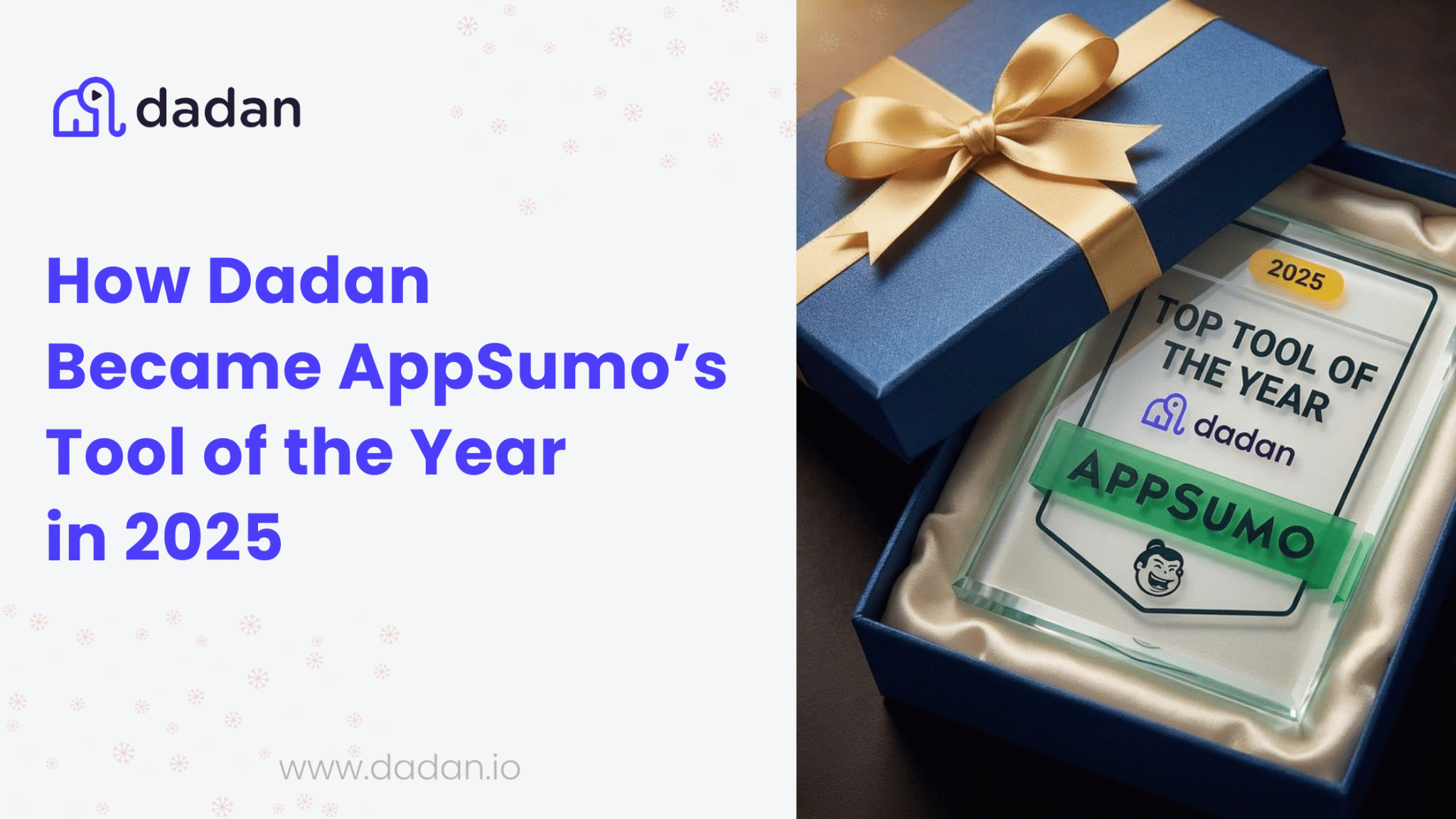
If you’ve ever looked at AppSumo’s Tool of the Year list, it’s easy to assume it’s majorly about sales volume. But it isn’t.
When we launched Dadan on AppSumo in July 2025, we already had around 10,000 users and active workflows. We were looking to onboard more power users to the platform, gather more concentrated product feedback, and use that input to shape what we built next. AppSumo also helped push word of mouth by putting Dadan in front of users who actively try tools and talk about them.
That’s the environment AppSumo creates.
Users buy quickly. They explore on their own. They ask questions on the deal page, leave reviews early, and request refunds if something feels confusing or incomplete. All of it is public. All of it affects how the product is judged.
Over the course of the campaign, Dadan generated $430,000 in sales, onboarded more than 3,300 users, and answered close to 400 public questions. The campaign received 123 reviews, averaging a 4.3 rating. Some users even compared Dadan to Loom, often pointing out where Dadan worked better for their use case.
This post walks through how that launch unfolded, why we chose a lifetime deal, how we prepared for the volume, what surfaced during the campaign, and what changed in the product afterward.
What Is AppSumo and How Does It Work
AppSumo is a platform where software products are sold as time-bound deals, often with lifetime access.
From a product team’s point of view, what matters is the concentration. A large number of users sign up in a short window. They don’t come through demos or sales calls. They purchase, create an account, and start using the product on their own.
The deal page becomes the primary reference point. Questions, reviews, refunds, everything happens in the same window.
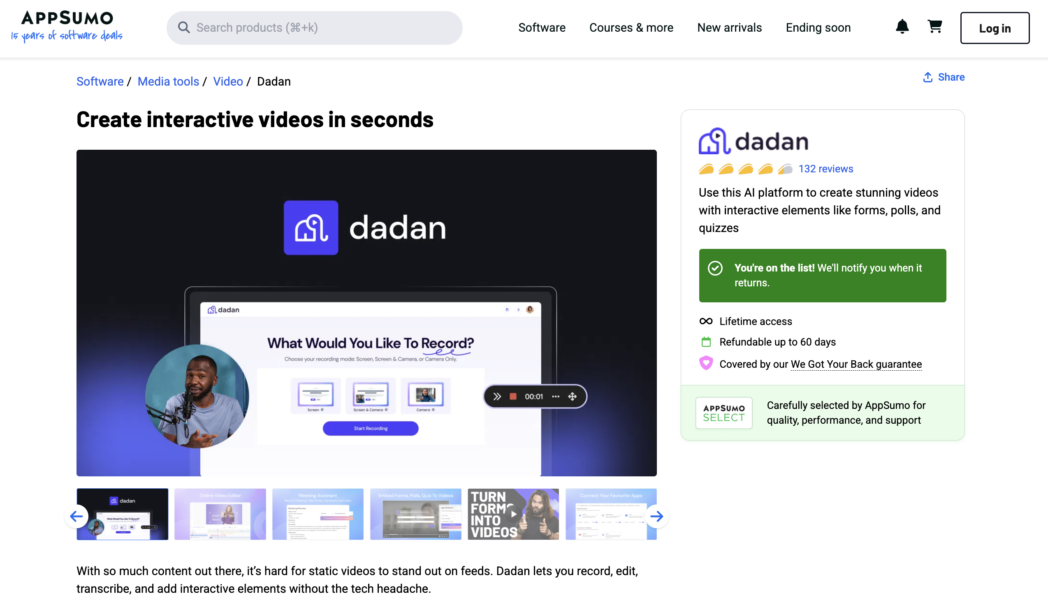
If you’re evaluating AppSumo as a channel, this is the part to pay attention to. You don’t get feedback privately. It accumulates in one place and stays there. How you answer questions, how you respond, and how clearly you explain limitations all become part of the product’s public record.
That’s how AppSumo works. It compresses early usage, feedback, and reactions into a short cycle and leaves a clear record of how the product and team handled them.
What Is Dadan
Dadan combines three things people usually use separate tools for. You can use it to record your screen when you need to explain something visually. You can also use it to record meetings and generate notes. Recordings are transcribed and summarised automatically.
On top of that, recordings can be made interactive. Instead of sending a plain video, you can add prompts or actions so viewers know what to do next.
By the time we launched on AppSumo, Dadan was already being used this way. That mattered on AppSumo because this audience doesn’t spend much time figuring things out. If a product needs setup, training, or a mental model before it’s useful, you see that immediately in questions, reviews, and refunds.
Why We Chose a Lifetime Deal
We chose a lifetime deal on AppSumo for a very practical reason. We wanted a large number of people to start using Dadan immediately and tell us what didn’t work.
So, a lifetime deal is like a two-way bet, and both sides know it.
On the user side, people are paying for something that’s still in early stages. It may not be perfect. But in return, they’re betting that if the product improves over time, the value they get far outweighs what they paid upfront. If it doesn’t, they take that loss.
From the company side, the upside is different.
A lifetime deal brings in a large number of users very quickly. They don’t come through sales calls or demos. They start using the product and tell you what works and what doesn’t. That kind of feedback, coming all at once, is hard to get any other way.
It also changes the pace of development. Instead of waiting weeks or months to see how features land, you find out almost immediately. That helped us stabilise the product much faster than we could have through a slower rollout.
There’s also a practical reason people don’t talk about much. The upfront revenue helps in the short term. It gives you room to focus on fixing issues and shipping improvements without constantly worrying about cash flow.
That combination is why we chose a lifetime deal for Dadan. We weren’t looking to replace subscriptions or chase a one-time spike. We wanted feedback, volume, and honest usage.
Getting Ready for the AppSumo Launch
Before the deal went live on AppSumo, most of the work had nothing to do with the product itself. It was operational.
Coverage
AppSumo launches don’t give you time to “settle in.” Questions start coming in as soon as the deal is visible, and they come from different time zones. We knew that if replies were slow or vague in the first few days, that would show up in the questions section and reviews.
So the first thing we aligned on was coverage. Someone had to be available to respond quickly, even outside normal working hours.
Credibility
We also made sure that the product and company information clearly conveyed what Dadan did and where it was headed. Founder profiles, company pages, and public-facing information mattered more than usual here.
AppSumo users treat lifetime deals like an early bet on a product. They look for signs that the company is real, active, and likely to keep shipping.
Onboarding
Onboarding was another priority. The onboarding emails focused on getting users to record something quickly and understand how the product fits into their work, without a walkthrough.
That approach worked well enough that we ended up speaking directly with over 200 users on one-on-one calls during the campaign, mostly to understand how they were using the product and where they got stuck. Moreover, the AppSumo team reached out to us to reference the onboarding flow as an example for other launches.
We’ve made the same onboarding guide available as a downloadable resource for teams planning their own AppSumo launch.
If you need an AppSumo launch guide, email us at [email protected]. If you would like to talk to us for more information, feel free to schedule a call.
Early Reviewer Access
A week before launch, AppSumo also gives early access to reviewers. That feedback mattered more than we expected.
One of those early reviews surfaced a bug that would have caused issues if it had gone live. Fixing it before launch saved us from answering the same question repeatedly once the deal was public.
FAQs
Finally, we prepared an FAQ before the launch based on questions we already knew users would ask. As new questions came in, the FAQ was updated. That reduced repetition and kept responses consistent across the deal page, chat, and calls.
None of this was complicated. But skipping any of it would have shown up very quickly once the deal went live.
What Happened After We Went Live
Once the deal went live on AppSumo, the first hour was relatively quiet. Then users started signing up, logging in, and trying the product for themselves. That’s when volume picked up across every channel we had open.
Over the next few days, this is what that looked like:
- 1,300+ conversations on website chat
- 200+ scheduled calls with users
- 100+ unscheduled calls, often triggered by a question or issue that couldn’t be resolved over text
We didn’t restrict access or push people toward documentation. If someone wanted to talk about a bug, a feature, a use case, or confusion, we spoke to them. Those conversations were the fastest way to understand where expectations matched and where they didn’t.
At the same time, the team was fully occupied handling volume:
- answering questions publicly on the deal page
- fixing issues as they surfaced
- giving short demos
- closing loops so the same questions didn’t repeat
That’s how we handled the first phase of the launch.
Reviews, Questions, and Community Behaviour
On AppSumo, reviews and refunds move the deal as much as sales do. Early on, we set a simple internal target to get to 20 reviews in the first week. But we crossed 30 reviews in the first week.
We didn’t incentivise reviews. That’s against AppSumo policy. What we did do was ask users to share honest feedback once they’d had time to use the product, and we responded to every review that came in.
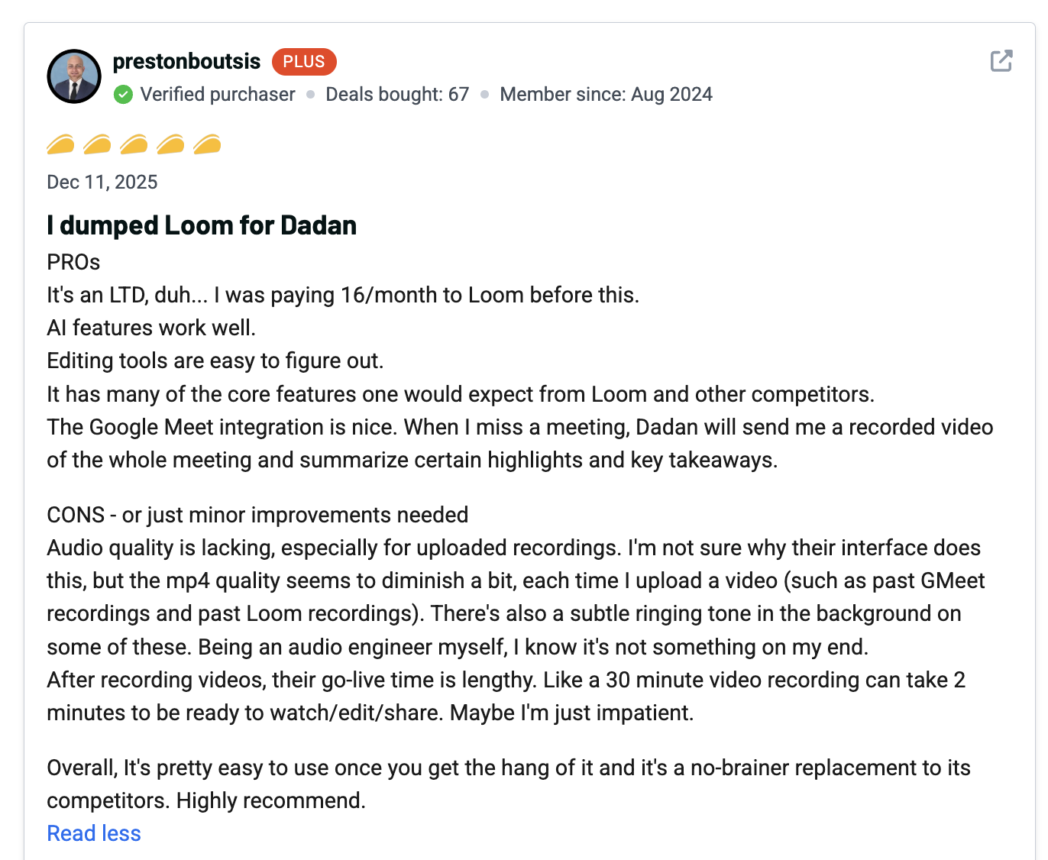
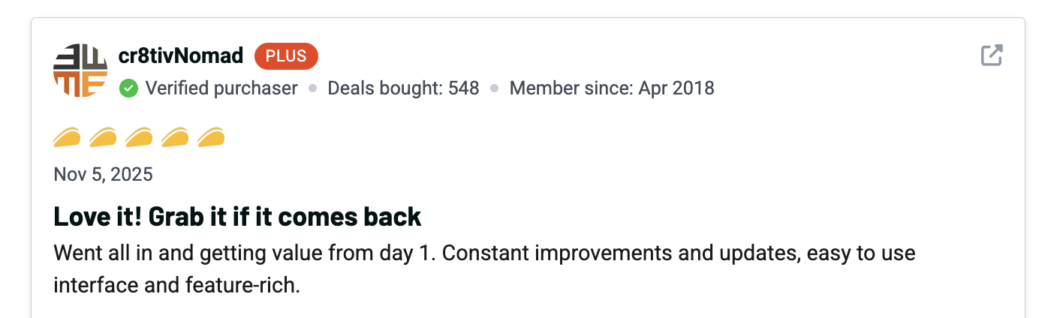
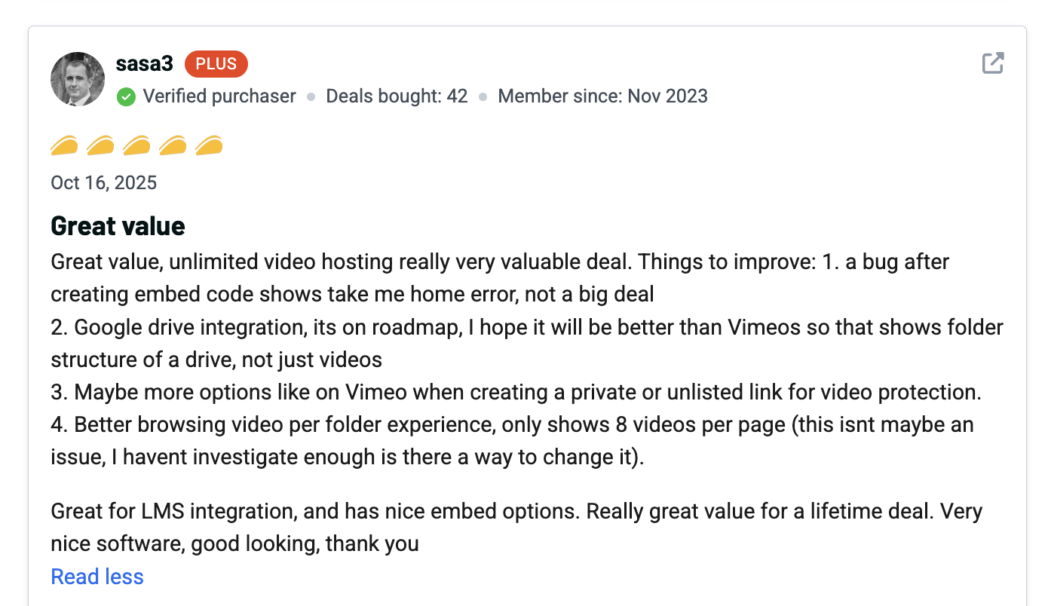
When a review pointed to confusion or a missed expectation, we clarified it publicly. When it flagged a real issue, we acknowledged it and explained what we were doing about it.
Refunds were also treated the same way. In many cases, the product simply wasn’t a fit for that user’s workflow. In others, the reason was confusion or a learning gap. When that happened, we reached out directly and cleared it up. Some of those conversations led to users updating their reviews later.
What mattered most for us was keeping the conversation visible and accurate. Reviews and replies sit on the deal page long after they’re written. Each response becomes part of how the product is evaluated by the next user.
So, higher review counts led to better placement and additional exposure through AppSumo’s internal promotion channels, including featured emails and founder mentions. That visibility drove more traffic back to the deal page and kept interest steady beyond the initial spike.
Sales, Traffic, and AppSumo Distribution
The campaign closed at $430,000 in sales. Traffic was highest during the first three days after the deal went live. After that, activity slowed, then picked up again toward the end of the campaign. This matched the typical AppSumo pattern.
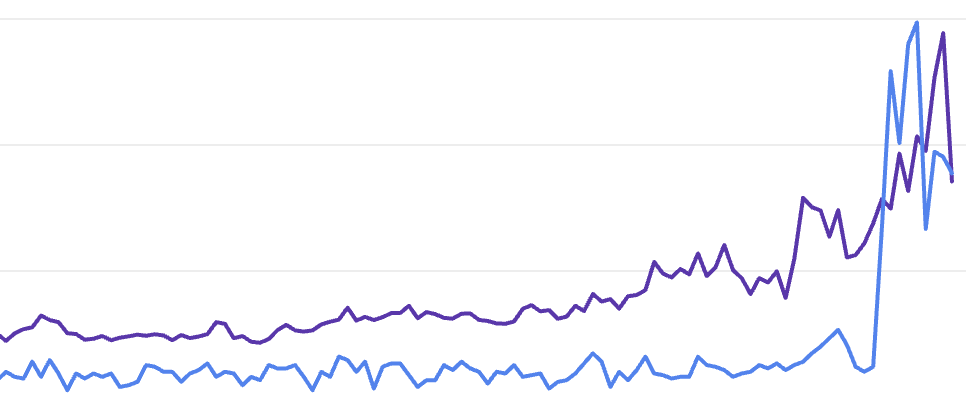
In terms of channels, AppSumo’s email campaigns drove the strongest results. Compared to other sources, email traffic converted more consistently and brought in users who were already familiar with buying tools on the platform.
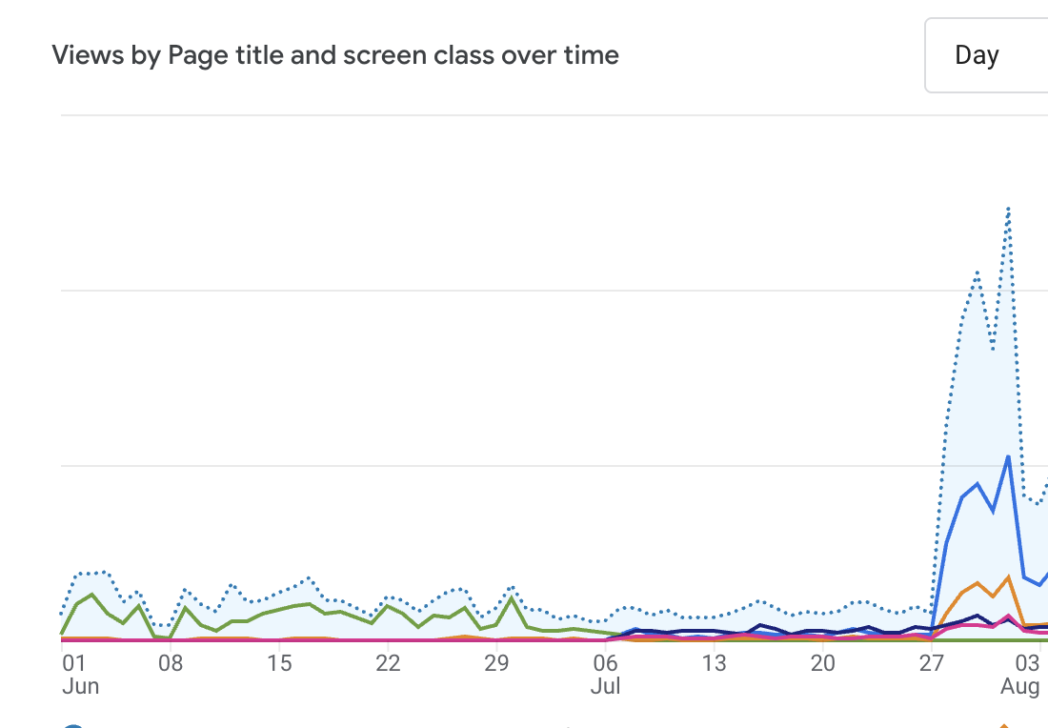
As review volume increased, AppSumo featured the deal in additional emails, including founder mentions. Each of these brought new users back to the deal page and helped sustain activity beyond the initial launch period.
During the campaign, we also saw an increase in branded search and improved keyword rankings toward the end of the deal.
YouTube Reviews and Facebook Groups
Before the campaign went live, some early reviewers were given access to Dadan. A few of them recorded walkthroughs and reviews on YouTube. Those videos started circulating once the deal was public.
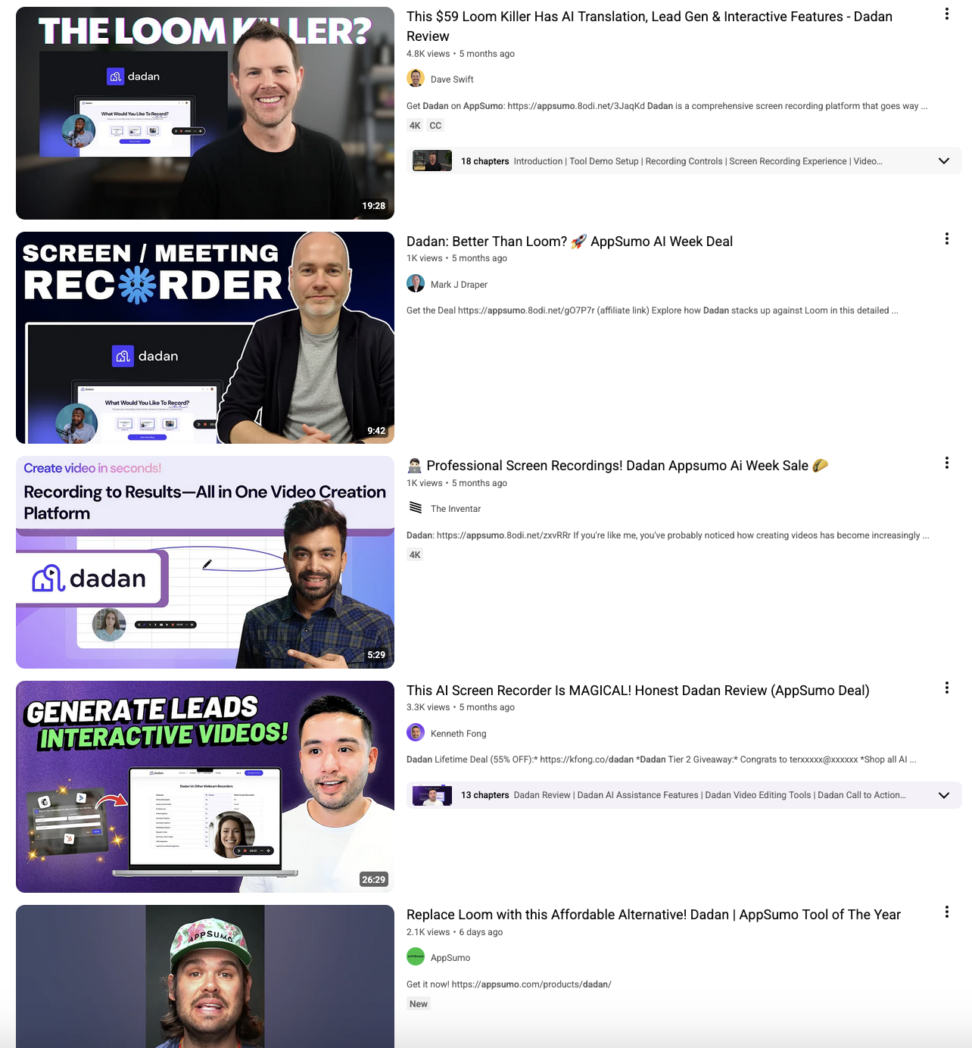
Those reviews did a great job because people watched them before buying. We tracked the comments on those videos and answered questions where clarification was needed. Responding to these reduced repeated questions later on the deal page.
Facebook groups also played a similar role. The lifetime deal community is active across a few large AppSumo-focused Facebook groups. We partnered with some of them during the middle of the campaign to run live sessions and open Q&As. These were mostly about clearing doubts, explaining edge cases, and answering questions that didn’t fit into a FAQ.
So, our takeaway from this was that if you ignore YouTube comments or community threads, you miss a large part of how people evaluate your product.
After the Campaign
After the campaign, we created a private Facebook community called Dadan Insider. It was set up for users who came in through AppSumo and wanted a direct line to the product team.
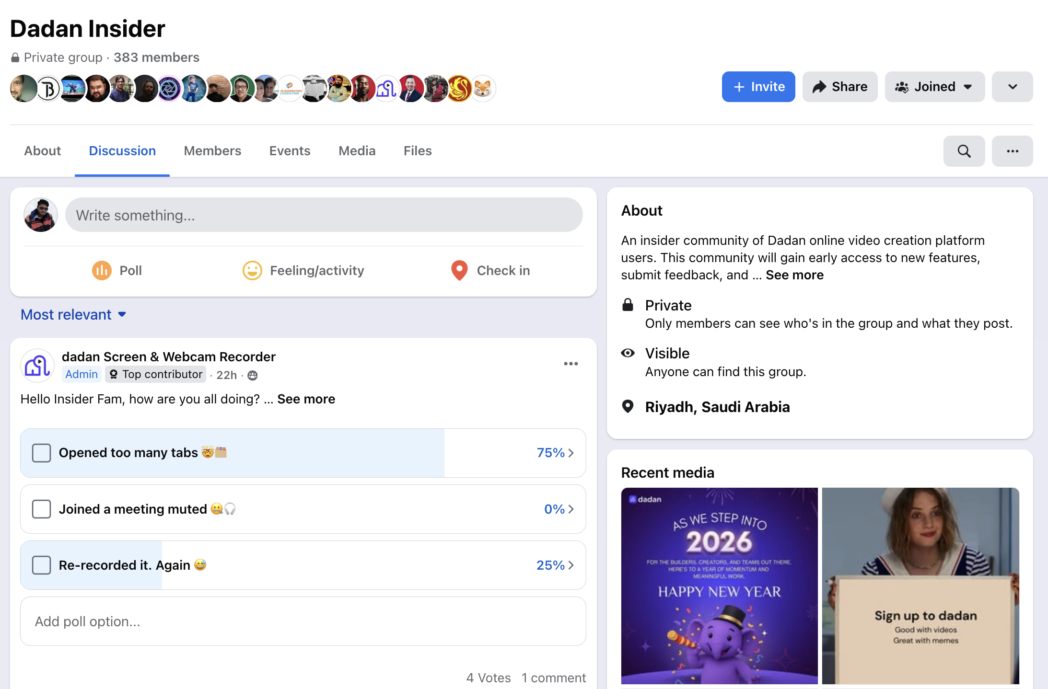
We used the group to share early access to features and collect feedback quickly. Over time, this pushed us toward building based on user requests rather than internal assumptions.
Alongside the AppSumo launch, we continued building Dadan’s MRR through our usual channels.
The community also helped in other ways. Several users went on to leave positive reviews on platforms like G2. We also reprioritised our public roadmap based on discussions and reviews, which helped us roll out new features faster.
AppSumo’s Tool of the Year
AppSumo’s Tool of the Year is based on how a product performs once your deal is live and how users start using it. That includes community feedback, refunds, reviews, question volume, and the consistency with which your team engages after the initial launch window.
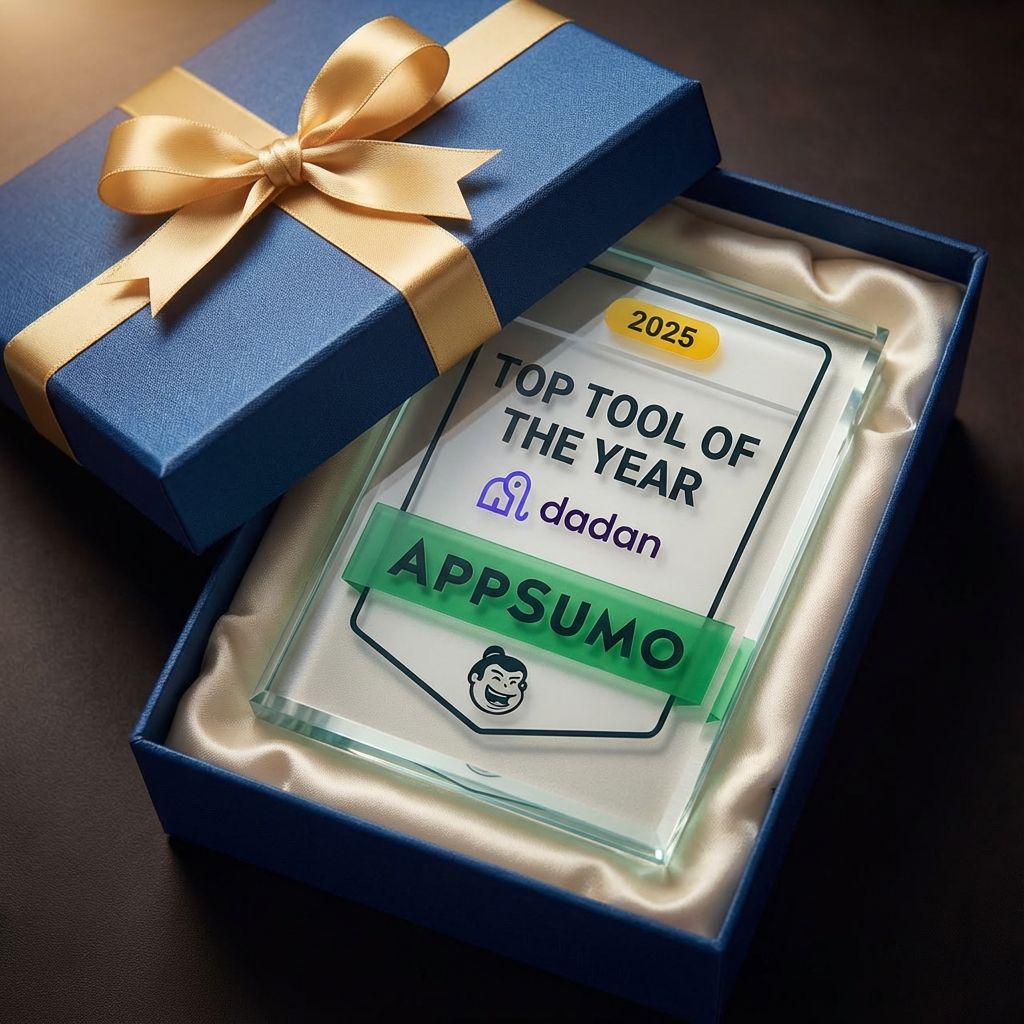
For teams considering an AppSumo launch, the takeaway is that the platform rewards products that can handle volume, stay responsive, and hold up once users move past first impressions.
If you’re considering AppSumo next year, this is the bar to prepare for.
Things Worth Keeping in Mind if You’re Launching on AppSumo
- Make sure your team is ready to handle a high volume of questions in the first week and again toward the end of the campaign.
- Aim to reach 10 reviews in the first 7 days. Reviews influence visibility and trust on the deal page.
- Do not incentivise reviews. You can ask users to share honest feedback, and you should respond to every review.
- Be prepared to answer questions across multiple channels, like AppSumo deal page, website chat, and direct calls.
- Expect a large number of users to ask for direct conversations. Use those calls to understand real use cases and gaps.
- Partner with relevant Facebook groups during the middle of the campaign to keep conversations active.
- If the deal performs well, work with AppSumo’s affiliate or team to run joint webinars or sessions.
- Launching new features during the deal period helps. AppSumo posts these updates as notifications, which drives additional visits to the deal page.
- Negative reviews will happen. In many cases, they come from learning gaps. Reach out, clarify, and address the issue directly. Some of these can be turned into positive outcomes.

Conclusion
So, if you’re planning an AppSumo launch, make sure you’re ready for what comes with that exposure.
AppSumo works best when your product already solves a problem, onboarding is simple, and the team can respond quickly and clearly in public. Lifetime deals amplify whatever is already true about your product. If things are unclear, you’ll hear about that immediately. If users find value quickly, they’ll say that too.
For us, the value came from treating the launch as a feedback window, rather than a sales event. Questions, reviews, refunds, and conversations all pointed to where the product needed tightening. Acting on that input while the deal was live made all the difference.
If you plan to launch on AppSumo, go in with that expectation. Prepare for volume, stay visible, answer directly, and use what you learn.
That’s what makes the platform useful, and that’s what determines how the launch plays out.